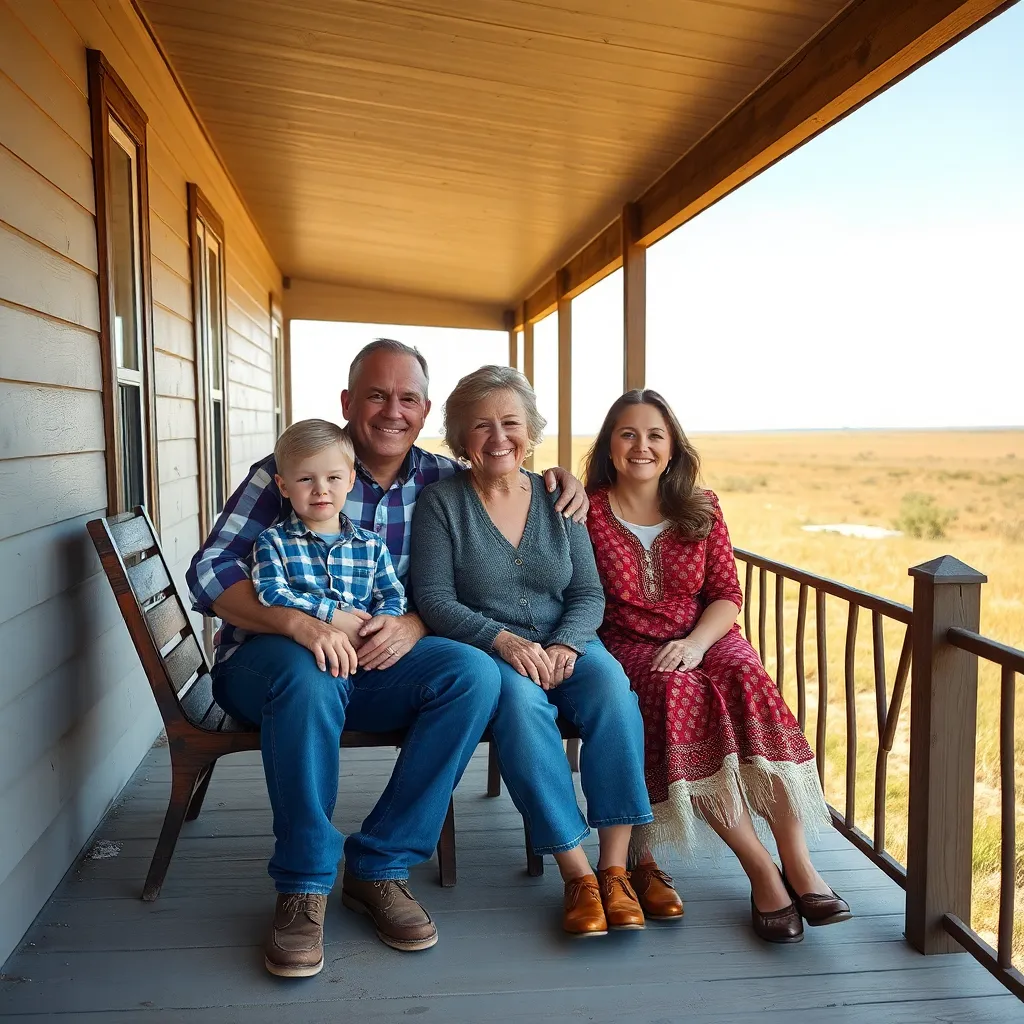
How Oklahoma Families Can Help a Loved One Struggling With Addiction
Addiction strains families to their breaking point. This guide gives Oklahoma families concrete, evidence-based strategies for getting help without losing themselves in the process.
Loving someone who is addicted to drugs or alcohol is one of the most exhausting, heartbreaking experiences a person can endure. You have likely done things you never imagined — searching their room, lying to protect them, giving money you could not afford, watching them cycle through promises and relapses. If you recognize yourself in these words, you are not weak, and you are not alone. This guide is written for you.
Addiction Is a Family Disease
The Substance Abuse and Mental Health Services Administration (SAMHSA) is clear that addiction does not only affect the person using substances — it reshapes the entire family system. Patterns of behavior, communication, and emotional response that develop in response to a family member’s addiction can persist for years, long after the substance use has ended.
Oklahoma families dealing with addiction often experience profound stress and grief. The Centers for Disease Control and Prevention (CDC) research on adverse childhood experiences (ACEs) identifies parental substance use as one of the most significant early childhood stressors, with measurable effects on children’s long-term physical and mental health. Adult family members — spouses, parents, siblings — experience their own forms of trauma, anxiety, and depression.
Understanding addiction as a chronic brain disease — not a choice or moral failing — does not mean excusing harmful behavior. The National Institute on Drug Abuse (NIDA) describes addiction as involving changes to brain circuits governing reward, motivation, memory, and impulse control. This is why someone who genuinely wants to stop using may be unable to do so without professional help. Understanding this helps families respond with effectiveness rather than just emotion.
The Difference Between Helping and Enabling
This distinction is among the most important things a family member can grasp:
Helping provides genuine support for someone’s recovery — attending family therapy, driving someone to a treatment appointment, providing emotional encouragement, creating a stable and sober home environment.
Enabling removes the natural consequences of addiction in ways that make it easier for the person to continue using — paying for rent or food when money goes to drugs, calling in sick to an employer on their behalf, covering up legal or financial problems, bailing someone out repeatedly without conditions.
The challenge is that enabling behaviors feel loving in the moment. It is an act of love to keep your child from sleeping on the streets. But when the consequence of active addiction is removed — comfortable housing, financial support, no accountability — the pressure to change decreases. Boundaries can feel cruel; they are often the most genuinely loving response.
Most family members enable without knowing it, and recognizing the pattern without self-judgment is the beginning of change. Attending Al-Anon or Nar-Anon, or working with a therapist, can help you identify specific enabling behaviors and find alternatives.
Practical Strategies for Oklahoma Families
Learn About Addiction
Knowledge reduces the chaos. When you understand what withdrawal feels like, why cravings are so powerful, and what the research says about treatment, you are less likely to be manipulated by rationalizations and less likely to respond from panic. NIDA’s website (drugabuse.gov), SAMHSA’s family guides at samhsa.gov, and books like “Beautiful Boy” and “In the Realm of Hungry Ghosts” offer accessible insight into addiction’s realities.
Set Clear, Compassionate Limits
Limits protect your wellbeing and communicate that the behavior — not the person — is unacceptable. Some examples:
- “I love you, and I will not give you cash while you are actively using.”
- “You are welcome in my home when you are sober. When you are using, you cannot be here.”
- “I will help you pay for treatment, but I will not pay rent or bills while you are not engaged in recovery.”
Limits work best when they are specific, communicated calmly (not in the heat of conflict), and followed through consistently. Inconsistency teaches the addicted person that limits do not mean anything.
Consider Community Reinforcement and Family Training (CRAFT)
CRAFT is an evidence-based approach specifically designed to help family members reduce enabling behaviors, improve their own wellbeing, and strategically encourage their loved one to enter treatment — without confrontational interventions. Research shows CRAFT is significantly more effective at getting reluctant individuals into treatment than Al-Anon alone or traditional “tough love” approaches.
CRAFT is taught through trained therapists and through self-help resources like the book “Get Your Loved One Sober” by Robert Meyers. Ask ODMHSAS or your county mental health center for referrals to CRAFT-trained therapists in Oklahoma.
Plan for Overdose
If your loved one uses opioids or methamphetamine (which may now contain fentanyl), overdose preparedness is not optional. Keep naloxone (Narcan) in your home, learn how to use it, and know that you can obtain it without a prescription at Oklahoma pharmacies.
Oklahoma’s Good Samaritan law provides limited immunity protections for people who call 911 during a drug-related overdose emergency. Do not let fear of legal consequences prevent a 911 call — your loved one’s life is always the priority.
Maintain Your Own Health
You cannot pour from an empty cup. Caring for a family member in addiction while neglecting your own mental and physical health is unsustainable. Make sure you are:
- Sleeping and eating adequately
- Maintaining your own medical appointments
- Nurturing relationships outside of the family addiction dynamic
- Seeking your own therapy or counseling
- Attending support groups like Al-Anon or Nar-Anon
Modeling healthy self-care is also meaningful for your loved one in recovery — it shows that life can be lived fully without substances.
Support Groups for Oklahoma Families
Oklahoma has a network of peer support groups specifically for family members:
Al-Anon: Applies 12-step principles to help family members find peace and strength regardless of whether their loved one seeks help. Meetings throughout Oklahoma, searchable at al-anon.org.
Nar-Anon: Specifically serves families affected by someone else’s drug use. Find Oklahoma meetings at nar-anon.org.
Families Anonymous: A 12-step program for family members of people with drug problems. Some Oklahoma meetings available.
Oklahoma Family Support Groups: ODMHSAS funds family support programming in some counties. Contact your county community mental health center for locally available options.
Online support: Multiple platforms offer online family support group meetings, which can be particularly helpful for Oklahomans in rural areas with limited local options.
How to Talk to Your Loved One About Treatment
Conversations about addiction and treatment are rarely simple. A few principles from motivational interviewing research that can help:
- Choose the right moment: When your loved one is sober, calm, and not immediately defensive.
- Lead with love, not accusation: “I love you and I’m scared” lands very differently than “You’re destroying your life.”
- Be specific about concern: Name specific behaviors and their effects, rather than making global character judgments.
- Offer concrete help: Have treatment information ready. Offer to make a call together, or to drive them to an assessment.
- Tolerate ambivalence: Most people with addiction have complex feelings about change. Allowing them to express ambivalence without immediately arguing the other side can paradoxically increase motivation for change.
- Do not make promises you cannot keep: If you say you will end the relationship if they do not get help, mean it.
When to Seek Professional Intervention Help
If multiple family conversations have failed and you believe your loved one’s life is in immediate danger, a professionally facilitated intervention may be appropriate. Oklahoma has certified intervention professionals (CIPs) who can guide families through structured intervention processes. The ODMHSAS website and NJ211’s equivalent — Oklahoma 2-1-1 — can provide referrals to intervention resources.
Ready to Get Help?
You do not have to carry this alone, and neither does your loved one. Our hotline is here for Oklahoma families at every stage — whether you need guidance on how to talk to someone about treatment, help finding resources, or simply someone who understands what you are going through.
Call the Oklahoma Addiction Hotline. We are available 24 hours a day, 7 days a week, and the call is completely free and confidential. Help for your family starts with one phone call.
Continue Reading

Methamphetamine in Oklahoma: A Dual Crisis Alongside Opioids
Oklahoma faces both an opioid epidemic and a severe methamphetamine crisis. This guide examines Oklahoma's meth problem, its causes, community impact, and available treatment.

Addiction and Recovery in Oklahoma's Tribal Communities: Resources and Culturally Sensitive Care
Oklahoma has 39 federally recognized tribes. Substance use disorder disproportionately affects Native American communities here. This guide covers tribal health resources and culturally appropriate treatment.